
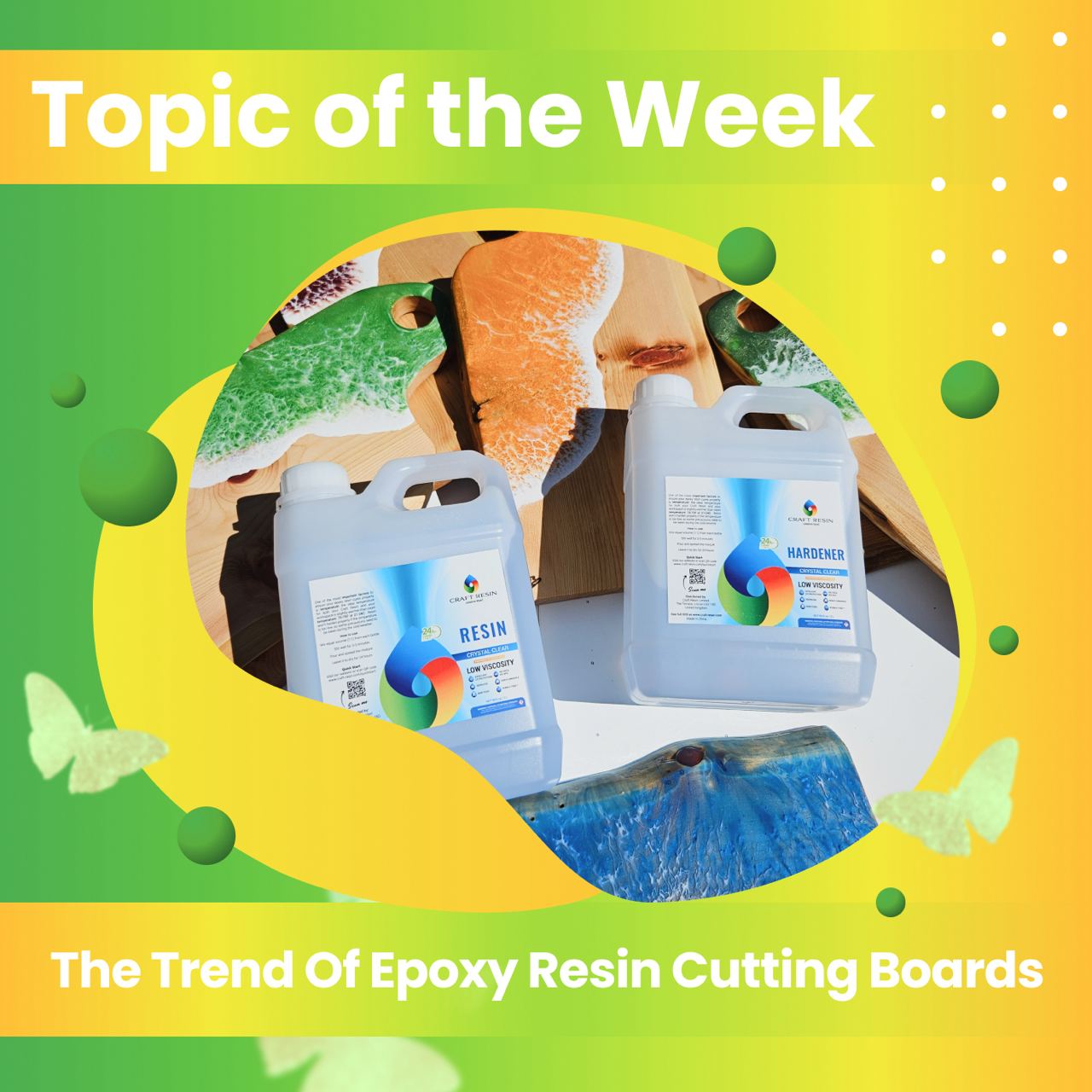
Epoxy resin is a popular way to decorate cutting boards, and it's worth being precise about what the resin itself is - and isn't - suitable for once it's part of a piece that touches food.
Concerns about its safety for food contact are reasonable. This article aims to address them and provide clarity on the safe use of epoxy resin on and around cutting boards.

Is epoxy resin safe for food contact?
Yes, for incidental food contact, once the resin is fully cured - that means food that touches the surface briefly and in passing, not a surface food is cut on or prepared against. Cured Craft Resin is not intended for direct, prolonged or repeated food contact, and you should not cut directly on a resin surface. Keep the actual cutting and food-prep surface in wood or another certified food-contact material, and use Craft Resin for the decorative parts of the board - inlays, edge details, embedded designs, and finishes on areas the knife never touches.
Addressing common safety concerns:
- Leaching of chemicals: fully cured epoxy forms a hard, non-porous surface.
- BPA: Craft Resin is BPA-free.
- Low VOC: Craft Resin is a low-VOC product, minimising the release of harmful fumes during the curing process

- Follow manufacturer's instructions: Carefully follow the instructions provided by the epoxy resin manufacturer for mixing, curing, and handling.
- Full cure: Allow the epoxy resin to fully cure for the recommended duration before use. This ensures complete polymerization and a safe, inert surface for its decorative, incidental-contact role.
- Proper cleaning: Clean the resin-decorated areas with warm water and mild soap. Avoid harsh chemicals or abrasive cleaners.
- Avoid direct heat: Do not expose the resin to direct heat, such as placing it in a hot oven or dishwasher.
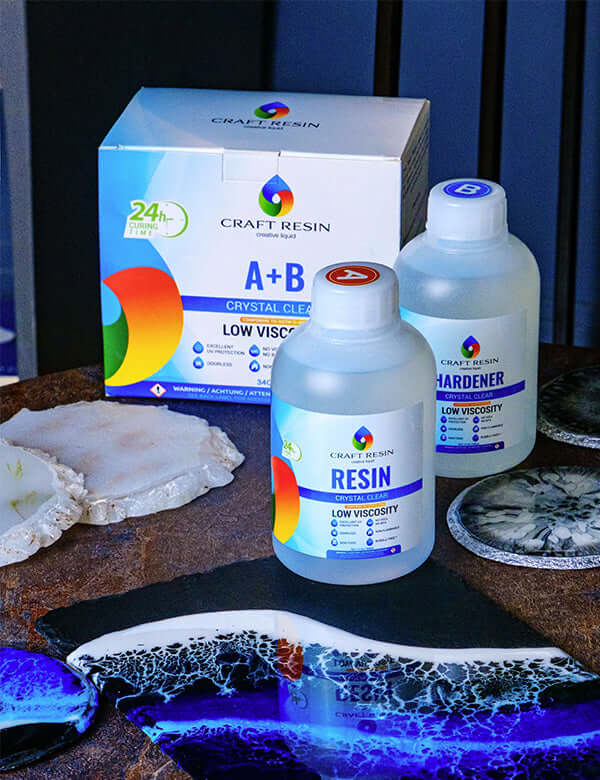
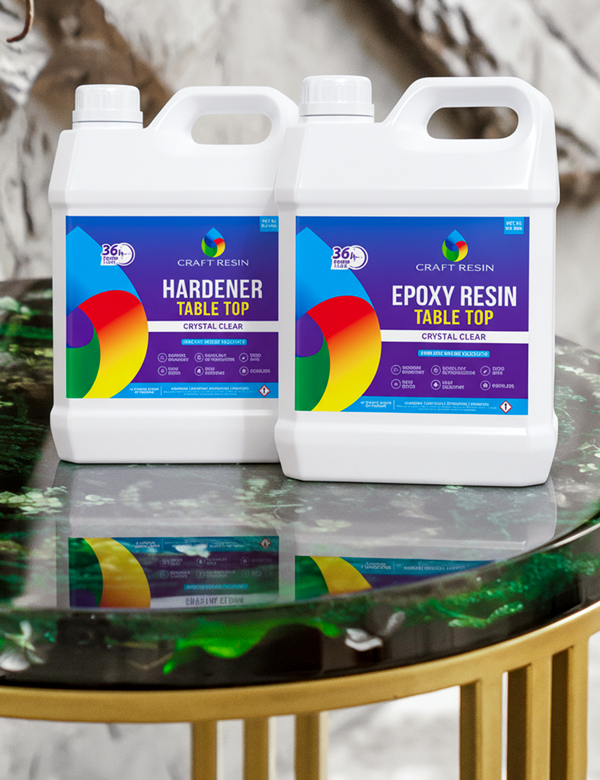
Craft Resin is a high-quality epoxy resin that is BPA-free, low-VOC, and easy to use - a good choice for the decorative details on a board. It is suitable for incidental food contact once fully cured, but it is not a substitute for a proper food-prep or cutting surface.
Keep the blade on wood or another certified cutting surface, and let Craft Resin handle the artistry around it - that way you get a striking, durable design without compromising food safety.

Epoxy resin on cutting boards has quickly gained popularity for its striking visual appeal and durability as a design element. Unlike a plain wooden board, resin offers endless possibilities for customisation, allowing artisans to create unique designs that reflect their individual style - on the parts of the board that are decorative rather than the functional cutting surface.

From mesmerising swirls of colour to embedded objects like flowers or metallic accents, resin-decorated boards are as much a statement piece as they are a kitchen accent. Their smooth, non-porous surface also makes the resin sections hygienic and easy to clean, appealing to health-conscious makers who keep the actual food-prep surface separate.

The trend of decorating cutting boards with epoxy resin sits at the intersection of artistry and craftsmanship. With Craft Resin, artisans of all skill levels can bring their designs to life with confidence, while keeping the actual cutting surface on a certified food-prep material. As we look to the future, let us continue to embrace innovation, push the boundaries of creativity, and celebrate the endless possibilities of epoxy resin art.