

Epoxy Resin Calculator: How Much Resin Do I Need?
Use our epoxy resin calculator to estimate how much mixed resin and hardener you need for your project. Enter your dimensions, choose your units, add a waste allowance, and get an approximate epoxy volume for tabletops, art pieces, molds, river tables, flower preservation, and deep pour projects.
The calculator helps you plan your pour more accurately, reduce waste, and choose the right Craft Resin product for your project.
Calculate your epoxy resin amount
Enter the size of your project below. The result shows the estimated amount of mixed epoxy resin and hardener combined.
For best results, add 5–15% extra resin to allow for mixing loss, surface absorption, edges, and small measurement differences.
How to Use
- Choose Units of Measurement: Ensure you select either centimeters (cm) or inches (in) before entering your dimensions.
- Select the Shape: Choose between 'Rectangle' or 'Round'.
- Enter Dimensions: Input your project's dimensions: Length, Width, and Thickness for rectangular projects or Diameter and Thickness for round projects.
The calculator will estimate the total amount of mixed epoxy you need. This includes both resin and hardener after mixing, not each part separately. For most projects, we recommend adding a small waste allowance. Epoxy can be lost during mixing, pouring, spreading, or when it soaks into porous materials such as wood.
How we choose
Table Top — coats up to 1/8" (3 mm) per layer
Arts & Crafts — layers up to 1/4" (6 mm) per layer
Deep Pour — layers up to 2" (5 cm) per layer
Going deeper than the rating? Pour in layers, or move up to the next resin.
Calculator is an estimate. For very porous wood or live-edge projects, consider a higher waste %.
Which Craft Resin Product Should I Use?
Different epoxy resin projects need different formulas. A thin tabletop coating does not behave the same way as a deep mold or river table pour. Use the guide below to choose the best Craft Resin product for your project.
| Project type | Typical use | Recommended product |
|---|---|---|
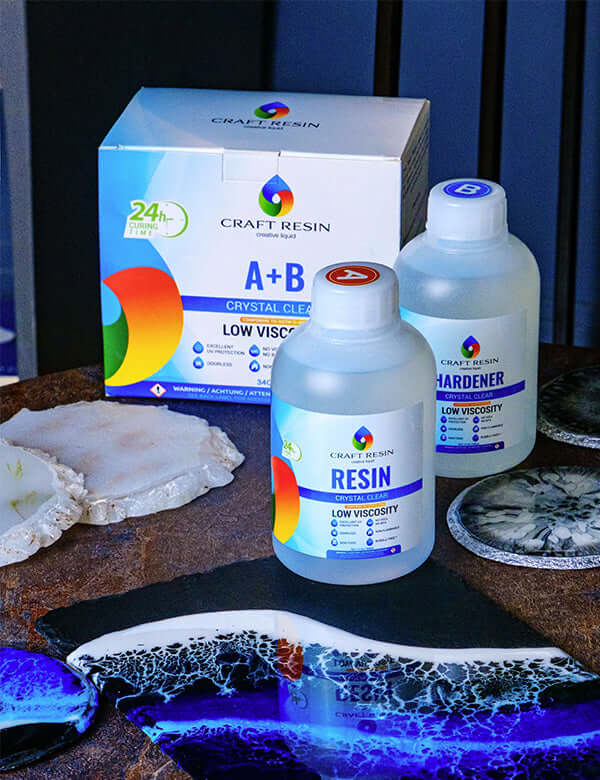
| Art coating | Canvas art, small boards, creative pieces | Arts & Crafts Resin |
| Coasters, trays, jewelry | Small molds and craft projects | Arts & Crafts Resin |
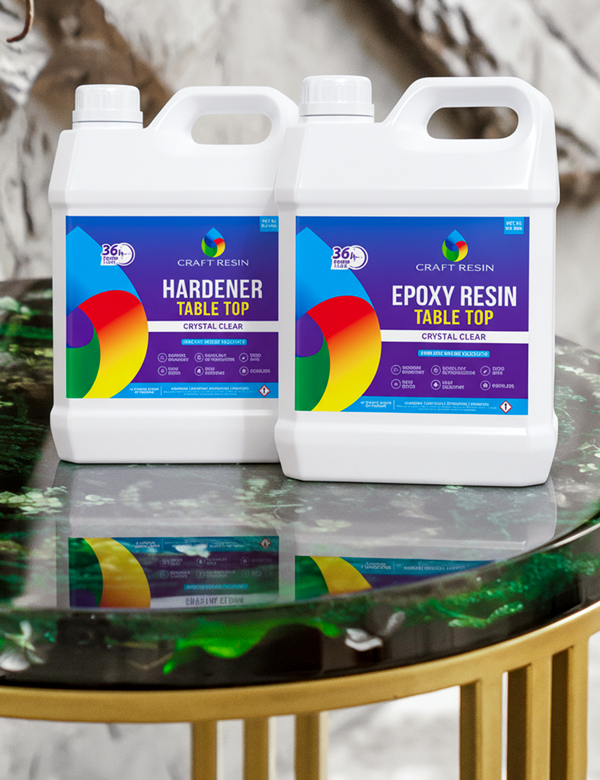
| Tumblers | Cups and drinkware coated on a turner | Table Top Epoxy |
| Tabletops | Wood tables, desks, side tables | Table Top Epoxy |
| Countertops and bar tops | Durable glossy surface coating | Table Top Epoxy |
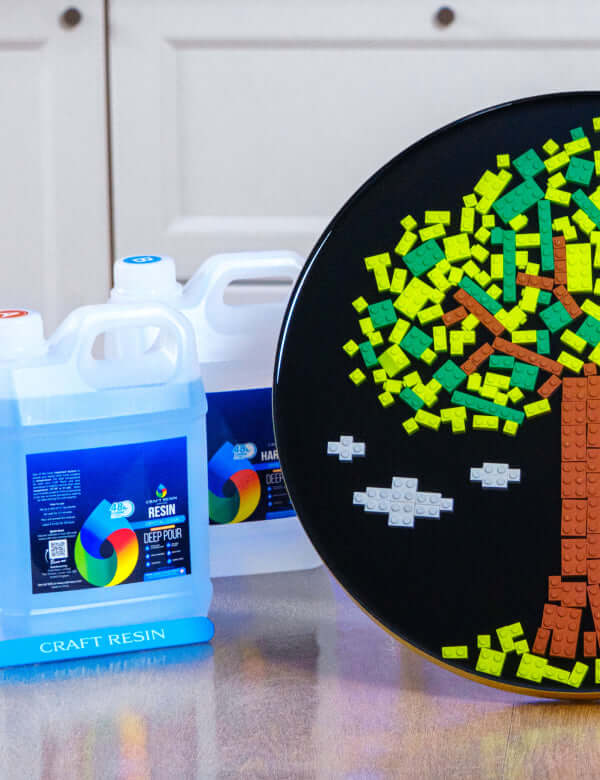
| River tables | Thick pours between wood slabs | Deep Pour Epoxy |
| Flower preservation | Encapsulation in deep molds | Deep Pour Epoxy |
| Large castings | Deep molds and volume pours | Deep Pour Epoxy |
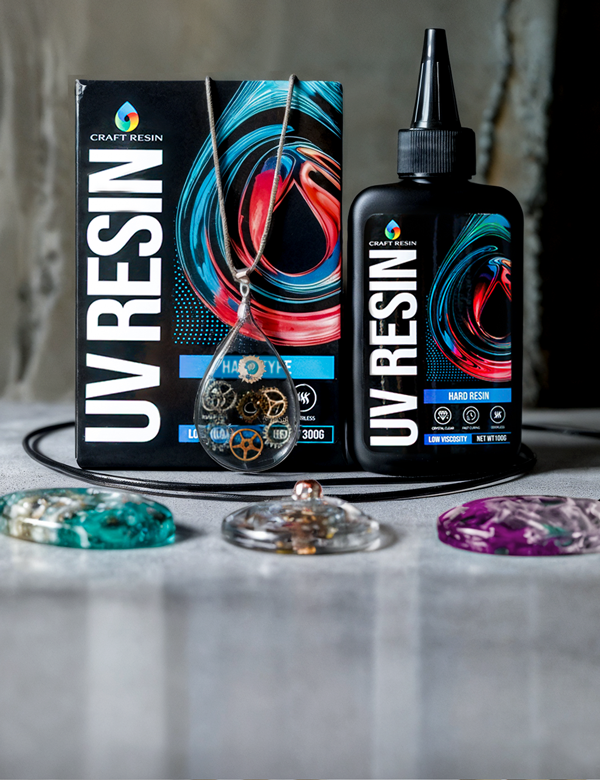
| Small quick details | Jewelry, repairs, small decorations | UV Resin |
If your project is a thin surface coating, choose a coating resin such as Craft Resin Table Top Epoxy or Arts & Crafts Resin. If your project requires a deeper pour, choose Craft Resin Deep Pour Epoxy.
Always check the product instructions before pouring, especially for maximum pour depth, working time, curing time, and mixing ratio.
Epoxy resin calculation formula
The calculator uses simple volume formulas based on the shape of your project. You can also use these formulas manually if you want to check your estimate.
For rectangular or square projects:
Length × Width × Thickness = Volume
Example:
A tabletop that is 24 inches long, 18 inches wide, and has a 1/8 inch coating:
24 × 18 × 0.125 = 54 cubic inches
Then convert the volume into fluid ounces, liters, or gallons.
For round projects:
π × Radius² × Thickness = Volume
Example:
A round tray with a 12 inch diameter and 1/4 inch depth:
Radius = 6 inches
3.14 × 6² × 0.25 = 28.26 cubic inches
The final result should be treated as the total mixed epoxy amount. This means the resin and hardener together after mixing.
Epoxy Resin Thickness Guide
The thickness of your pour has a big impact on how much epoxy resin you need. Thin coating projects usually need much less resin than deep molds or casting projects.
| Thickness | Decimal inches | Best for |
|---|---|---|
| 1/16 inch | 0.0625 | Very thin art coating |
| 1/8 inch | 0.125 | Tabletop flood coat |
| 1/4 inch | 0.25 | Thicker coating, trays, shallow molds |
| 1/2 inch | 0.5 | Small casting projects |
| 1 inch+ | 1.0+ | Deep pour molds, river tables, flower preservation |
For thin coatings, a flood coat is usually enough to create a glossy, glass-like finish. For deeper projects, use an epoxy resin designed for deep pours and always follow the product instructions for maximum pour depth.
Do not use a coating resin for very deep pours unless the product instructions specifically allow it.
Before You Pour Epoxy Resin
A good calculation helps, but the final result also depends on preparation, mixing, temperature, and the type of resin you use.
Add extra resin for waste. We recommend adding 5–15% extra epoxy to your calculation. This helps cover mixing loss, drips, uneven surfaces, porous wood, and small measuring differences.
Measure resin and hardener carefully. Always follow the mixing ratio on your Craft Resin product. Do not guess the ratio, and do not add extra hardener to make epoxy cure faster.
Seal porous surfaces first. Wood and other porous materials can absorb epoxy and release bubbles. For tabletops or wood projects, a thin seal coat can help reduce bubbles before the main flood coat.
Check maximum pour depth. Deep pours need a resin designed for thicker layers. If your project is a river table, flower preservation piece, or large mold, use a deep pour epoxy and follow the product instructions.
Avoid mixing too much at once. Large batches of epoxy can heat up quickly. Mix only the amount you can safely pour within the working time of the product.
Work at the right temperature. Epoxy works best in a stable, room-temperature environment. Cold temperatures can make resin thicker and harder to mix, while very warm conditions can shorten working time.
Epoxy Resin Calculator FAQ
How much epoxy resin do I need?
The amount of epoxy resin you need depends on the size, shape, and depth of your project. For flat rectangular surfaces, measure the length, width, and thickness of the pour. For round projects, measure the diameter and depth. The Craft Resin epoxy calculator helps estimate the total mixed amount of resin and hardener you need.
Does the calculator show resin and hardener together?
Yes. The calculator shows the estimated total amount of mixed epoxy resin. This means the resin and hardener combined after mixing. Always check the mixing ratio on your Craft Resin product before measuring and pouring.
How much extra epoxy should I add for waste?
For most projects, it is sensible to add around 5-15% extra epoxy. This helps cover mixing loss, drips, uneven surfaces, porous wood, edges, and small measurement differences. A 10% waste allowance is a good starting point for many resin projects.
How much epoxy do I need for a tabletop?
For a tabletop, measure the length and width of the surface, then choose the thickness of your flood coat. A thin flood coat usually needs much less resin than a casting or deep pour project. For tabletops, counters, bar tops, and wood surfaces, Craft Resin Table Top Epoxy is usually the best choice.
Can I use this calculator for round molds and trays?
Yes. For round molds, trays, coasters, and circular projects, enter the diameter and pour depth into the calculator. The result will estimate the amount of mixed epoxy resin needed for that round shape.
Can I use this calculator for deep pour epoxy?
Yes. You can use the calculator to estimate the epoxy volume for deeper projects such as river tables, large molds, castings, and flower preservation. For deeper pours, use Craft Resin Deep Pour Epoxy and always follow the product instructions for maximum pour depth and curing time.
What is the best epoxy resin for deep pours?
For deep pours, river tables, large castings, and flower preservation, Craft Resin Deep Pour Epoxy is the best option. It is designed for thicker pours where a standard coating resin would not be suitable. For shallow coatings, tabletops, and art projects, choose a resin made for thinner layers.
Should I measure epoxy resin by weight or volume?
Follow the instructions for the specific Craft Resin product you are using. Some epoxy systems are measured by volume, while others may include weight guidance. The calculator estimates volume, so always check the product label before measuring resin and hardener.
What happens if I mix too much epoxy at once?
Large batches of epoxy can heat up quickly and cure faster than expected. This can reduce working time and affect the final result. Mix only the amount you can safely pour within the product’s working time, especially for larger or deeper projects.
Can I use the same epoxy for tabletops and deep molds?
Not always. Tabletops usually need a coating resin that creates a clear, glossy surface layer. Deep molds and river tables need an epoxy designed for thicker pours. Choose the resin based on your project type, pour depth, and the product instructions.