
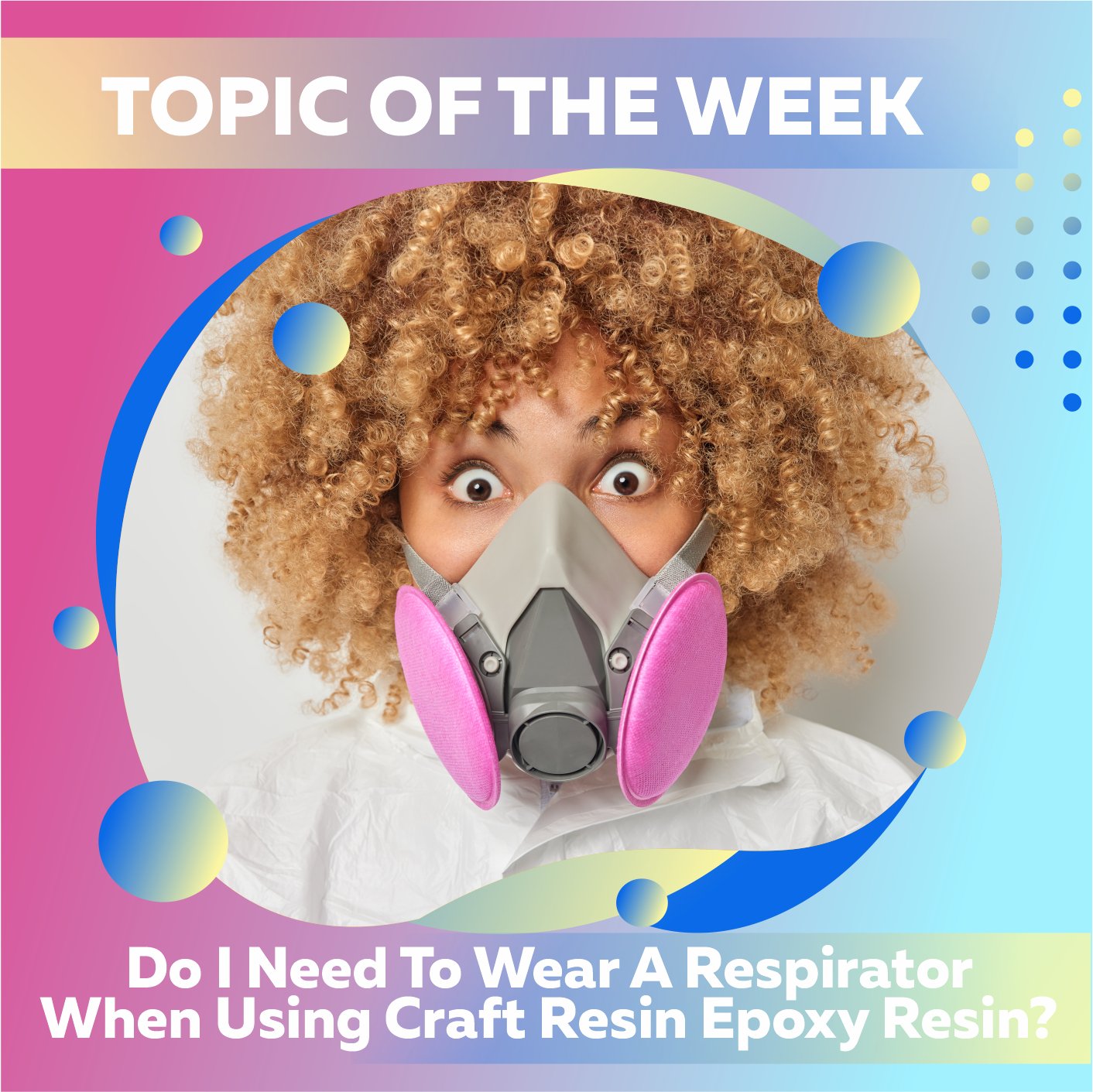
We are often asked whether you need to use a respirator when working with the resin. The answer isn’t a simple yes or no, because it depends on a few factors, which we go through below.
At Craft Resin we believe in offering advice that gives you the maximum protection, so that you can work with resin knowing it is not affecting your health. If you are ever worried about your health while working with our products, we will always advise taking the maximum precautions. Your health should always be the priority over creating.
The short answer
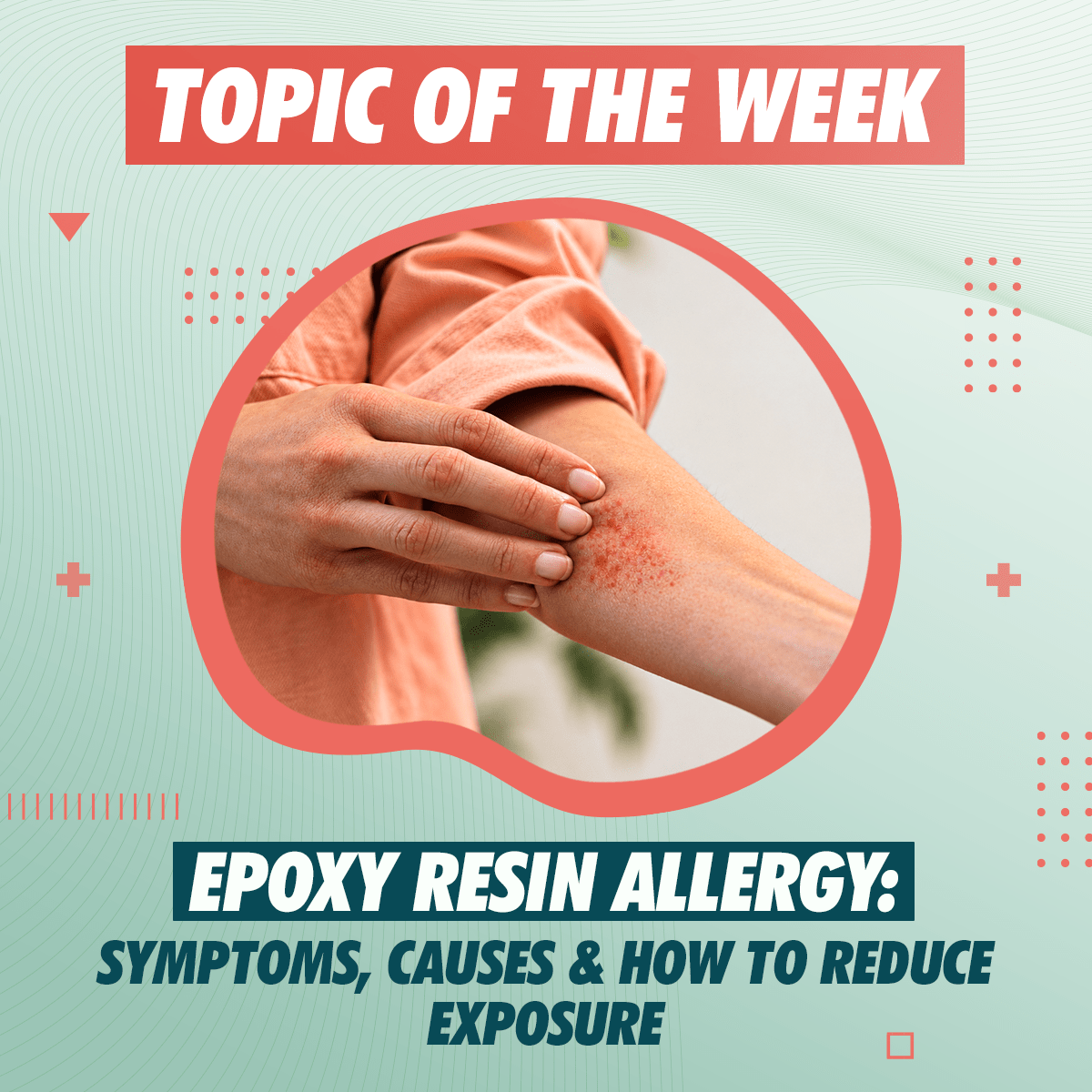
Craft Resin has been evaluated as a non-hazardous material. Craft Resin epoxy is formulated for low odour and is suited to home and professional use. Follow the safety data sheet for handling and ventilation and wear gloves: uncured resin can irritate skin and, with repeated contact, cause an allergic skin reaction. We still recommend that our product users are over-cautious with their health. Work in a well ventilated area. If you can't work in a well ventilated area because of temperature, or you simply can't tell whether your work area is well ventilated, wear a respirator.
If you are asking this question at all, you are probably concerned for your health, and that alone is a good reason to be over-cautious and protect yourself as much as possible.

The longer answer: how to judge your ventilation
It is very difficult for us to evaluate whether your workspace or home is ventilated well enough for you to work respirator free. Unless you are working outside, or in a workshop that has been evaluated by a safety company as having the correct ventilation, we will always assume that it isn't well ventilated.
Ventilation isn’t just opening a window. The air needs to be circulating and filtering outside. Even with a window open, the size of the opening, its location and the wind direction may mean that this isn't good enough.
Add to that, it is very hard to control the temperature in some locations when windows and doors are open, and that in turn causes problems in the resin projects themselves.

Is it compulsory?
No. Wearing a respirator is completely a personal choice. We recommend it anyway.
A respirator can be uncomfortable at times, and in warmer temperatures it may not be pleasant to work in, but your safety is more important than anything else, and taking this extra step may well be the right option for you.
Why we recommend it anyway
The reason we recommend a mask or respirator is that Craft Resin produces a low odour, and it is important to note that what customers are smelling are not fumes. Craft Resin's epoxy resin range is not VOC-free — like virtually all two-part epoxy systems, it contains some volatile organic compounds. We recommend working in a well-ventilated space and following the applicable Safety Data Sheet (SDS) for full handling guidance.
The full explanation — the difference between toxicity and sensitisation, and the complete list of safety precautions — is in our main safety guide: Everything you need to know about the safety of Craft Resin.

Which respirator should I buy?
We cannot advise you on this. There are many brands on the market, all covering protection for different things. If you speak to a supplier of safety equipment they will be able to recommend one that gives the correct protection for your needs, and make sure you get one that fits correctly. They may need to see our Safety Data Sheet in order to check which is right for you.
As always, this guidance applies to our brand’s epoxy resin. Other brands are formulated differently and we cannot advise on their safety precautions, so please speak to them directly if you are using another resin brand.
If you have any questions regarding safety, please don’t hesitate to contact us.
Team Craft Resin