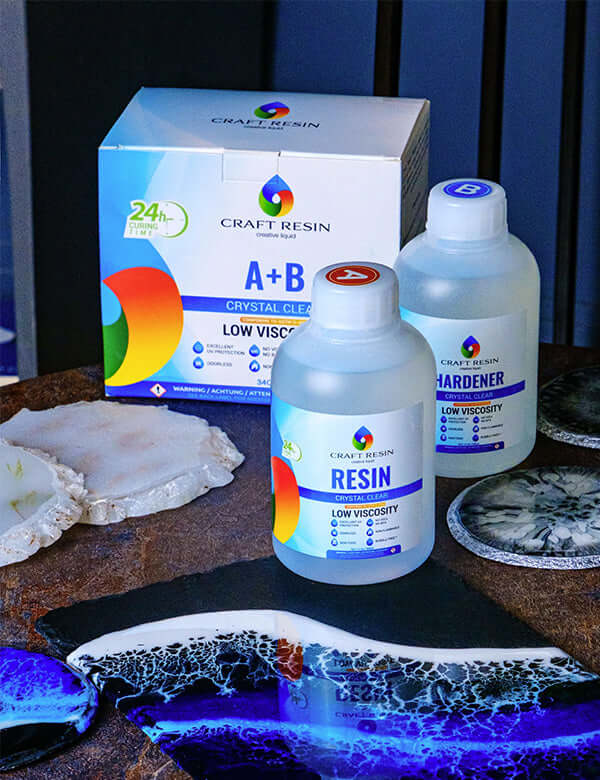
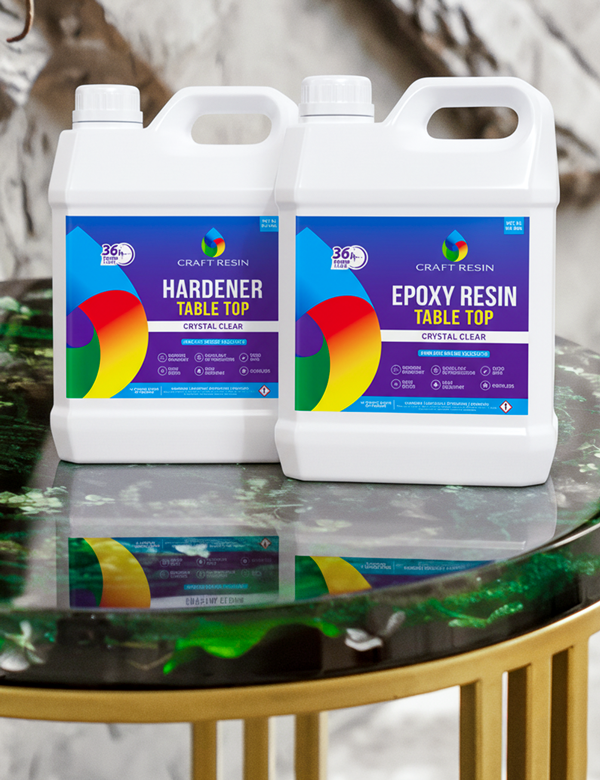

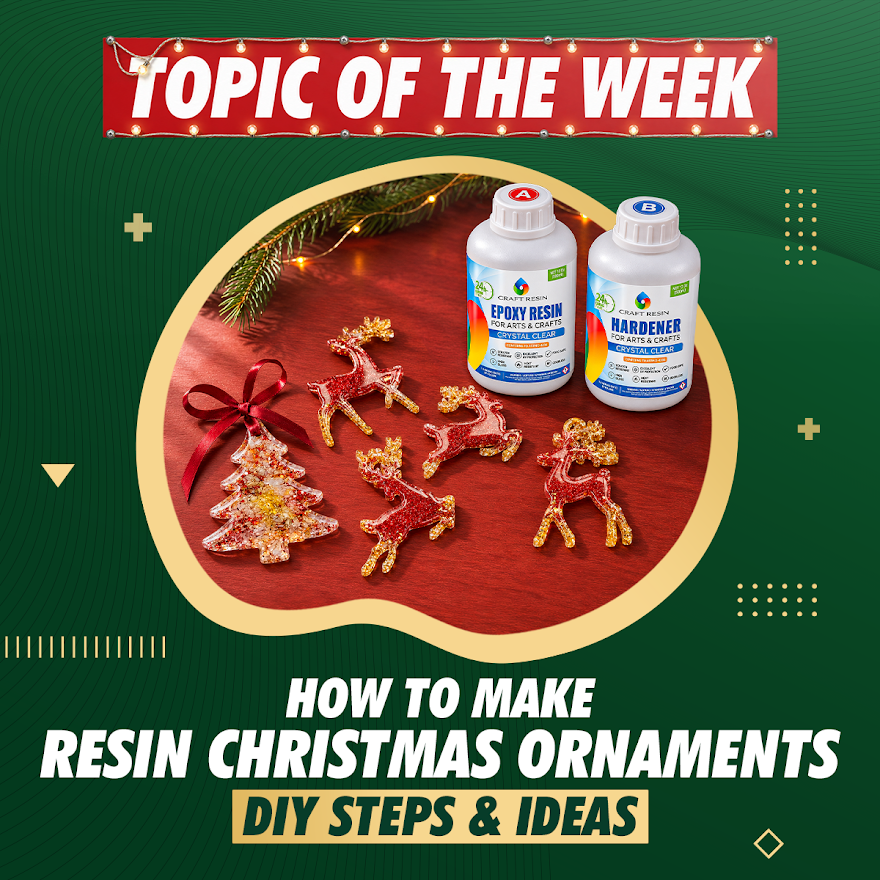
Silicone moulds, Craft Resin Arts & Crafts epoxy resin, and a few simple supplies are all you need to get started making your own Christmas tree ornaments. This guide walks you through how to make resin Christmas ornaments step by step, from measuring and mixing through to the finished piece hanging on your tree, plus a look at what the Craft Resin community is making this season for decoration ideas.

What You Need to Make Resin Christmas Ornaments
The most important thing about setting up for resin work is having everything within arm's reach before you mix anything. Arts & Crafts gives you approximately 35 minutes of working time once the resin and hardener are combined, and that's not quite long enough to be hunting through drawers mid-project. Choose a well-ventilated workspace and protect your work surface before starting.
Here's what you'll need:
- Craft Resin Arts & Crafts epoxy resin
- Christmas resin moulds in ornament shapes: baubles, stars, snowflakes, trees, angels
- Mica powder or liquid pigment for colour
- Glitter, gold leaf, dried flowers or other inclusions (optional)
- Protective gloves, apron and safety glasses
- Silicone measuring and mixing cups
- Mixing sticks or a silicone spatula
- Heat torch for removing surface bubbles
- Plastic sheeting or a silicone craft mat to protect your workspace
- Wet wipes and paper towels
If you're just getting started, choose silicone moulds in classic Christmas shapes such as trees, snowflakes, stars or angels. Moulds with built-in hanging holes are particularly convenient, as they make it easier to turn your finished resin pieces into tree decorations. Many of the tools on this list can be reused for future resin projects, making them a worthwhile investment. For a full breakdown of basic equipment and why each item matters, visit our equipment guide.
How to Make Resin Christmas Ornaments: Step by Step
The active work of making resin Christmas ornaments takes around an hour, but the resin needs additional time to cure. Craft Resin Arts & Crafts ornaments can typically be removed from their moulds after about 24 hours, while allowing at least 72 hours before hanging or gifting gives them more time to harden. If you'd like to watch the process first, our video on how to make adorable Christmas decorations using Craft Resin covers the steps from start to finish.
Step 1. Prepare your workspace and resin
Cover your work surface with plastic sheeting before you do anything else. Resin runs further than expected, and the one surface you forget to protect will be the one it ends up on. Lay your moulds out on a flat, level table, which matters because Arts & Crafts self-levels and will flow toward any tilt. Work in a well-ventilated area and wear suitable protective gloves and safety glasses.

Get the room to between 21–27°C (70–81°F) before you start, and keep it there for the entire cure period. Temperature has a big effect on how resin behaves. A cold room slows the chemical reaction and can cause soft patches or cloudiness in the finished piece. If you're working in colder months and your home tends to drop overnight, read our guide on how to keep resin warm before you begin.
To reduce micro-bubbles and get a smoother mix, warm the sealed bottles in a sink of warm water for 10-15 minutes beforehand. Keep the lids securely closed, don't submerge the bottles, and dry them thoroughly before opening to prevent water from getting into the resin.
Step 2. Measure 1:1 by volume
Arts & Crafts is a 1:1 ratio by volume only. Do not measure by weight. The hardener is denser than the resin, so weighing them throws the chemical balance off and the resin won't cure properly.
Use two silicone measuring jugs of the same size. Pour resin into one and hardener into the other until they reach the same level, then hold both side by side and check with your eyes that the surfaces line up. Once they're level, pour one into the other ready to mix. If you're adding mica powder or liquid pigment, do it at this stage, and keep the total colourant under 6% of the combined volume.
Step 3. Mix for at least 5 minutes
Set a timer for 5 minutes and mix slowly, scraping the sides and bottom of the jug as you go. Don't rush it and don't mix fast. A short or vigorous mix leaves unmixed resin at the edges of the container, which shows up as sticky, uncured patches in your finished ornaments. It also creates more trapped air bubbles.

Slow, circular movements for the full 5 minutes. Over time you'll develop a feel for when it's ready, but until then, the timer is non-negotiable.
Step 4. Pour into your ornament moulds
Pour the mixed resin slowly into each mould cavity. Arts & Crafts will flow out and fill the shape on its own, so you don't need to coax it into the corners. Don't overfill, especially if you're planning to add inclusions after pouring, since they take up space in the cavity.

Before you pour, check the depth of your mould. Craft Resin Arts & Crafts is designed for layers up to 6 mm (¼ inch). If your ornament mould is deeper, build the piece in layers following the recommended curing guidance, or choose a resin suitable for deeper casting. Do not fill a deep mould with Arts & Crafts in a single pour.
If you're adding glitter, dried flower petals or gold leaf, pour the resin first and give it two or three minutes to settle before placing your inclusions. Heavier pieces like dried petals will sink if added too early. For a scattered glitter effect, wait until the resin is just starting to thicken before adding the glitter so it sits at different depths rather than all sinking to the bottom.

After pouring, watch for surface bubbles over the next few minutes. Run a heat torch over the surface in slow, wide sweeping movements to pop them. Keep the torch moving and don't hold it too close to one spot. You may need to repeat this once or twice over the first hour as new bubbles rise.
Step 5. Let them cure
Cover the moulds loosely with a box or a sheet of cardboard to keep dust and animal hairs out, and leave everything completely undisturbed in a room at 21–27°C (70–81°F) for at least 24 hours. Moving the moulds in the first 12 hours is the most reliable way to ruin the surface, so leave them alone.
Your ornaments will feel hard to the touch at 24 hours and continue to harden over the following 72 hours, reaching full strength at 21 days. For hanging on a tree or gifting to someone, 72 hours minimum is the right call. If your project somehow hasn't started curing within 72 hours, it's usually down to a low room temperature, an incorrect volume measurement, or a layer that was poured too thick.
Step 6. Demould
When the cure time is up and the ornaments feel firm, gently flex the silicone mould to release them. Start with light pressure and increase if needed. Some moulds release easily, others need a bit more coaxing, and moulds that have had a lot of use tend to get tighter over time. A mould release spray can help if you're regularly making large batches, though it's not essential.
If an ornament is still slightly flexible when you demould it, that's fine. Place it flat on a clean surface while it finishes hardening so it doesn't cure at an angle.

Step 7. Perfect the edges
Hold each ornament up to the light and look for drips, sharp points or rough lines along the mould seam. These are completely normal and straightforward to fix.
Trim any obvious drips with scissors first, then sand the edges gently with 80-120 grit sandpaper until smooth. If sanding leaves the edge looking frosted or scratched, you have two good options. The quickest fix is running a gold or silver permanent marker along the edge, which hides the frosting and adds a finished, decorative effect. For a cleaner result, brush a thin layer of fresh resin over the sanded area with a fine brush, rest the ornament on an upside-down cup so the edge doesn't touch the table below, and let it cure smooth and clear.
If you notice a pet hair embedded in the surface or a gap where a bubble burst, sand the top layer down lightly, wipe clean with a dry cloth, then pour a thin top coat of fresh resin to restore the surface.
Step 8. How to hang resin Christmas ornaments
Most silicone ornament moulds cast a flat, closed back with no hanging hole. The simplest solution is to drill one yourself using a hand drill with a fine bit. Hold the ornament steady, apply light and steady pressure, and go slowly so the resin doesn't crack. Once the hole is through, thread ribbon, twine, a thin cord or a small jump ring through it.
If you'd rather skip drilling, look for silicone ornament moulds with a built-in hanging hole or loop. These allow you to create a ready-made opening for ribbon or twine, making it easier to hang your finished decorations. This is particularly convenient when making several Christmas ornaments at once.
Resin Christmas Ornament Ideas
Looking for resin Xmas ornaments to make this year? Here are ideas from the Craft Resin community, ranging from simple colour pours and glitter baubles through to botanical inclusions and personalised family keepsakes.
Bright Resin Baubles
Classic round bauble shapes are one of the best starting points for resin ornament making. @mokosha.jewellery makes striking resin baubles with vivid layered colour effects and also creates beautiful holiday ornament pendants that show just how much mileage you can get from a standard round or teardrop mould when the colour and inclusion choices are right.


@prescription_resin takes the bauble in a bolder direction: bright, high-saturation colours with extra glitter scattered through the pour and tinsel trim at the loop. It's a good reminder that resin ornaments can be as bold and maximalist as you like, which is exactly the kind of thing a mainstream shop producing thousands of identical units cannot do.
Resin Snowflake Ornaments
Snowflake moulds are a winter staple, and resin handles the fine detail in each point better than most other casting materials. @maikys_epoxys makes detailed resin snowflake pieces that work well in classic white and silver but take on a completely different character in icy blue or soft gold.

Snowflake resin moulds come in multi-piece sets that let you cast several different sizes in one session, which is useful for making a matching set of ornaments or a bundle to sell. @missl.inart and @vrlcraftwork are also worth following for snowflake inspiration, particularly for how both artists handle colour gradients from the centre of the snowflake out to the tip of each point.
Reindeer Ornaments
@sk_arthouse1 makes a lovely resin reindeer ornament pendant that works just as well displayed on a shelf as it does hanging from a tree.

@mokosha.jewellery takes a similar deer shape in a completely different direction with their resin deer ornament, showing how much the colour choices change the entire feel of an identical mould.

@resin.by.meis also makes beautifully coloured reindeer pendants that are worth looking up for the colour combination alone. The appeal of reindeer ornaments is that they read as seasonal without being tied exclusively to Christmas Day, which makes them easier to sell as general winter pieces too.
Christmas Trees with Flowers Inside
One of the most in-demand ornament trends right now is casting real dried botanical material inside Christmas tree shaped moulds. @madewithheart_byjoko has several beautiful examples:

and post showing different botanical Christmas tree variations, and more delicate flower-in-resin seasonal pieces. The flowers need to be fully dried before casting, and the result is a one-of-a-kind decoration that stays beautiful for years and genuinely cannot be produced at scale.
Personalised Family Ornaments
@littleresintreats makes personalised family name ornaments with custom colours and lettering. This is where resin ornament makers have a real advantage over mass-market shops: you can match any tree colour scheme and add any name, year or short message a customer wants. That personalised element tends to command a higher price point and often turns a one-time buyer into a returning customer who orders new ornaments every year.
If you have a resin business, it's worth making the personalisation option prominent in your listings rather than treating it as an add-on.
Angel Ornaments
Angel shapes cast beautifully in clear or opalescent resin with a light dusting of gold or pearl mica. A Piece Of Heaven makes resin angel ornaments that look elegant precisely because the approach is restrained: a careful pour into a detailed mould, finished simply. Like all resin pendants, they're lightweight, which means they won't put any strain on tree branches, and that's worth mentioning directly to customers who are used to the weight of glass or ceramic decorations.
Resin Christmas Countdown
For something a bit more ambitious than a single pendant, @perfect_designsbyely makes a resin Christmas countdown display that works as a shelf piece to use season after season. Projects like this involve more planning and a few layered pours, but the result is an original decoration that wouldn't be out of place in a gift shop.

For a step-by-step look at making a more complex cast festive figure, our video tutorial on creating a resin gnome walks through how to use Table Top resin in a detailed mould, which transfers well to other character and figure shapes.
Photo and Keepsake Ornaments
Small printed photos, pressed flowers, a lock of hair or a short handwritten note can all be cast inside a clear resin ornament mould to create something genuinely irreplaceable. A child's first Christmas, a wedding year, a memorial piece for someone who loved the holidays. The possibilities are real and the process is straightforward. Seal any paper-based inclusions with Mod Podge on all sides before casting to prevent the resin from yellowing the print.
For the full technique, visit our guide on putting photos in resin.
Glitter, Gold Flakes and colour Pours
Glitter and gold leaf are the quickest route from a blank mould to an ornament that looks intentional. Pour your base colour into the mould, wait two or three minutes for the resin to settle, then scatter glitter or press gold flakes into the surface before it starts to skin over. They'll suspend at different depths as the resin cures, which gives the finished piece a three-dimensional quality that a single colour pour doesn't have.
For a marbled effect, pour two or three different pigmented batches side by side without combining them and let them flow into each other naturally. The result is different every single time. Deep red, forest green, gold and ice blue are all strong choices for a festive palette, and any of them with chunky holographic glitter photographs particularly well.
Selling Resin Christmas Ornaments
Resin ornaments are one of the strongest seasonal products for a resin business. They're lightweight, they can be personalised, and they can be made in almost any colour or shape combination, which is something large retailers simply cannot offer at scale.
The lightweight point is worth stating explicitly in your listings and product descriptions. Unlike glass or ceramic ornaments, resin pendants won't bend tree branches. Customers who have been dealing with drooping branches from heavy glass baubles will genuinely appreciate that detail, and it's a real differentiator from what most shops sell.
If you're offering bespoke Christmas ornaments, make the personalisation options clearly visible from the first image and the product title. People searching for a personalised family name ornament or a specific colour to match their tree are already motivated buyers. Meeting them with a clear "yes, I can do that" in your listing copy converts better than making them ask.
For packaging, wrap each ornament individually in tissue paper so surfaces don't press together in transit. Resin can stick to itself when pressed together in warm conditions. Allow at least 72 hours of cure time before packaging, and 21 days for full strength.
Useful resources for selling your festive resin work:
- Pricing your resin work
- How to package your resin creations
- Selling your resin creations at Christmas markets
For more Christmas resin ideas beyond ornaments, including festive winter scene trays, tableware and seasonal display pieces, visit our full festive guide.
FAQ
How do you make resin ornaments?
Mix Craft Resin Arts & Crafts at a 1:1 ratio by volume, stir slowly for at least 5 minutes, pour into silicone ornament moulds and leave to cure at 21–27°C (70–81°F) for 24 hours. Demould once firm and finish any rough edges. The full step-by-step is above.
How long do resin ornaments take to cure?
Arts & Crafts ornaments are hard to the touch after 24 hours and continue to harden over the next 72 hours, reaching full strength at 21 days. For hanging on a tree, gifting, or packaging for customers, 72 hours is the recommended minimum.
How do you hang resin Christmas ornaments?
Either drill a small hole near the top edge with a hand drill and thread ribbon, twine or a jump ring through it, or use ornament moulds with a hanging hole already cast into the design, which saves that step entirely.
Can you put photos in resin ornaments?
Yes. Print your photo on regular paper, seal all sides with Mod Podge and let it dry completely before casting. This prevents the resin from yellowing or warping the paper. Full instructions are in our guide on putting photos in resin.
What type of resin is best for Christmas ornaments?
Craft Resin Arts & Crafts epoxy resin is suitable for making thin Christmas ornaments, including snowflakes, stars, and flat tree decorations. It is designed for layers up to 6 mm (¼ inch). For deeper ornament moulds, choose a resin suitable for deeper casting or build your decoration in layers according to the manufacturer's instructions.
Why are my resin Christmas ornaments still sticky?
Sticky resin ornaments can result from incorrect mixing ratios, insufficient mixing, low curing temperatures, or pouring thicker layers than recommended. Measure resin and hardener accurately, mix thoroughly for at least 5 minutes, and maintain the recommended curing temperature. If your ornaments remain sticky after the expected curing period, check our guide to fixing sticky resin.
Shop the resin used in this guide